Home / Articles
Upper Eyelid Fat Grafting Before and After: Results, Risks & Recovery
Home / Articles
Upper Eyelid Fat Grafting Before and After: Results, Risks & Recovery
In the past, the only solution for aging eyes was a blepharoplasty (eyelid surgery) to cut away sagging skin. However, modern aesthetic medicine recognizes that a youthful eye isn't just tight it is full. By choosing Upper Eyelid Fat Grafting patients can achieve a more natural rejuvenation that avoids the over-operated look. This guide provides a comprehensive look at the techniques what to expect from your results and why destination choice matters for your recovery.
The upper eyelid is one of the first places to show signs of aging. Over time, the fat pads that once provided a smooth cushion begin to shrink or shift. This leads to a hollowed-out look where the bone of the eye socket becomes more visible. For many, this is more than just a cosmetic concern; it makes them look exhausted even when they are well-rested. Upper Eyelid Fat Grafting addresses this by replacing that lost volume with living tissue from your own body, such as the abdomen or thighs.
Not everyone with eyelid concerns needs fat grafting, but it is the gold standard for specific structural issues.
This is a term surgeons use to describe a specific type of hollowing where the upper eyelid sags into a triangular shape, resembling the letter "A". If you see a deep shadow between your brow and your eyelid you likely have this deformity.
Interestingly, many candidates for this procedure are people who previously had a traditional eyelid surgery that removed too much fat. This over-resection can leave the eyes looking hollowed and old. Upper Eyelid Fat Grafting is the primary method used to fix these surgical errors.
The skin on your upper eyelid is the thinnest on your entire body. This means there is zero room for error. If a surgeon injects fat that is too thick or in large clumps it will appear as visible lumps under the skin.
The procedure is relatively quick, usually taking about 60 to 90 minutes. It is typically performed under local anesthesia with light sedation, meaning you are relaxed but awake.
Step | Process | Detail |
|---|---|---|
1. Harvesting | Gentle Liposuction | A tiny amount of fat (less than 10cc) is taken from the thigh or belly. |
2. Purification | Centrifugation | The fat is spun at high speeds to separate pure cells from oil and blood. |
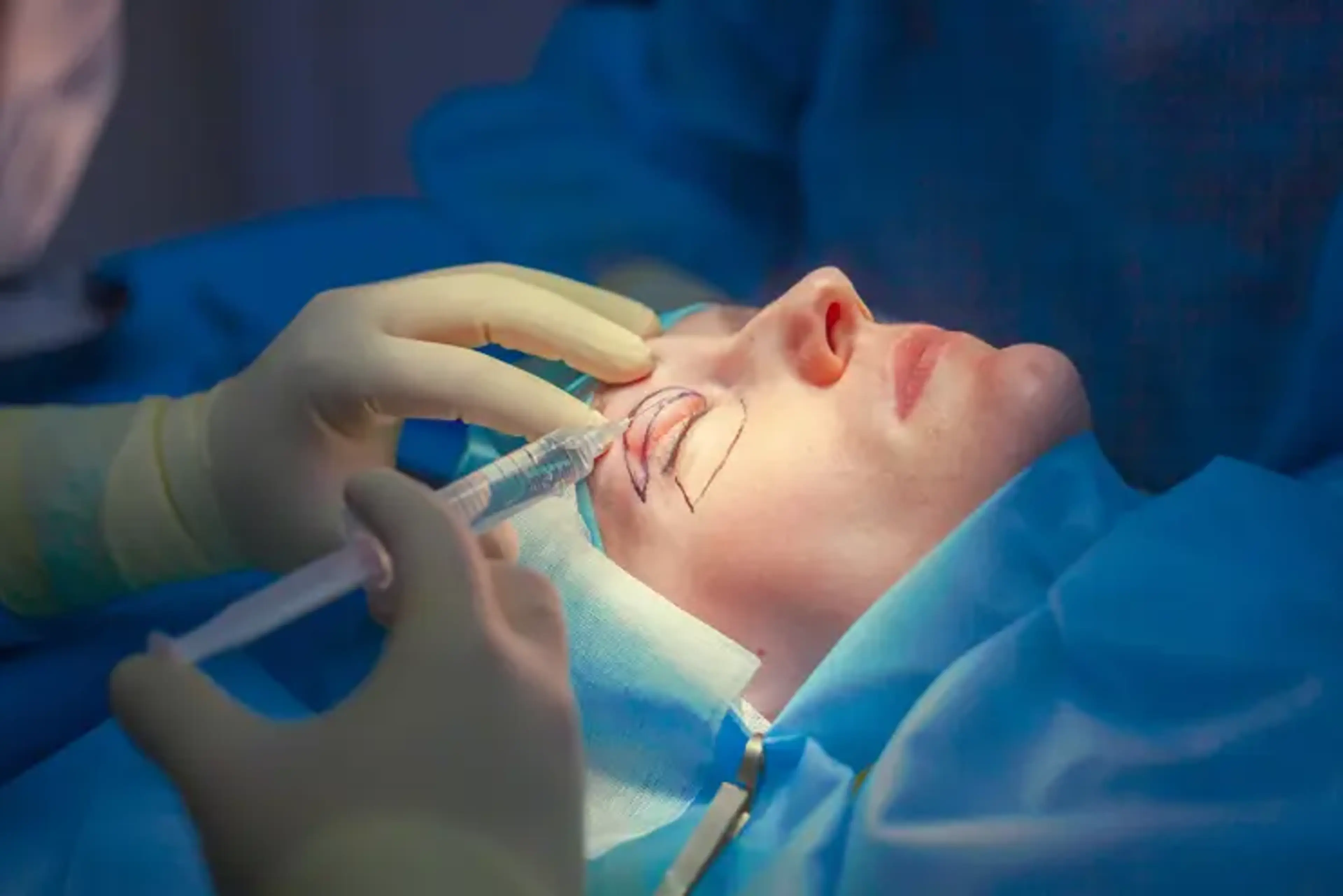
3. Injection | Micro-cannula | Using a needle-thin tube, the surgeon sculpts the eyelid with the fat. |
While many people try fillers first fat grafting is often the superior choice for the eye area.
When you look in the mirror immediately after surgery, your eyelids will look quite full. This is normal.
Not every fat cell transferred will survive. Generally, about 50% to 70% of the fat establishes a blood supply and stays forever. Your surgeon will slightly over-fill the area to account for this.
Because fat contains high concentrations of stem cells, patients often notice that the skin on their eyelids looks healthier, smoother and glowier a few months after the procedure. This is something synthetic fillers cannot do.
The main risk with this procedure is lumpiness or asymmetry. This happens when the fat is not purified correctly or is injected too aggressively. This is why choosing a specialist is vital. To minimize risk:
Do not rub your eyes for the first 14 days.
Avoid strenuous exercise for at least two weeks.
Follow all post-operative cleaning instructions to prevent infection.
Upper eyelid surgery requires extreme precision. While you should never choose a surgeon based on price alone, global markets offer different value points. South Korea is the cheapest and best for treatment regarding eyelid procedures.
Korean surgeons perform more eyelid surgeries per capita than anywhere else in the world. They have pioneered Nano-fat techniques that ensure the smoothest results possible. Because of the high volume of patients, they can offer advanced technology at a much lower price than clinics in the other countries.
Destination | Procedure Cost (USD) | Why Choose This Location? |
|---|---|---|
South Korea | $1,500 – $3,000 | Global leader cheapest and best results. |
USA | $4,500 – $8,000 | High overhead and facility fees. |
Europe | $3,500 – $6,500 | Quality varies; high tax rates. |
Thailand | $2,000 – $3,500 | Affordable, but specialized eye expertise varies. |
If performed by a trained specialist, no. The goal is a rested, youthful fullness. Surgeons are careful not to create a bulging effect.
The amount of fat needed is very small. Most patients describe the donor site as feeling like a small, dull bruise for 2 or 3 days.
Yes. Many patients combine Upper Eyelid Fat Grafting with an incisional or non-incisional blepharoplasty to create a defined crease and restore volume at the same time.
The fat that survives the first three months is permanent. While you will continue to age naturally, that specific volume will remain for life.
South Korea has refined the use of Nano-fat to a science. Their specialized clinics use advanced filtration systems that ensure the fat is smooth enough for even the thinnest eyelid skin, providing the highest success rate globally.