Home / Articles
Struggling With Uneven Double Eyelids? Here’s How We Fix It
Home / Articles
Struggling With Uneven Double Eyelids? Here’s How We Fix It
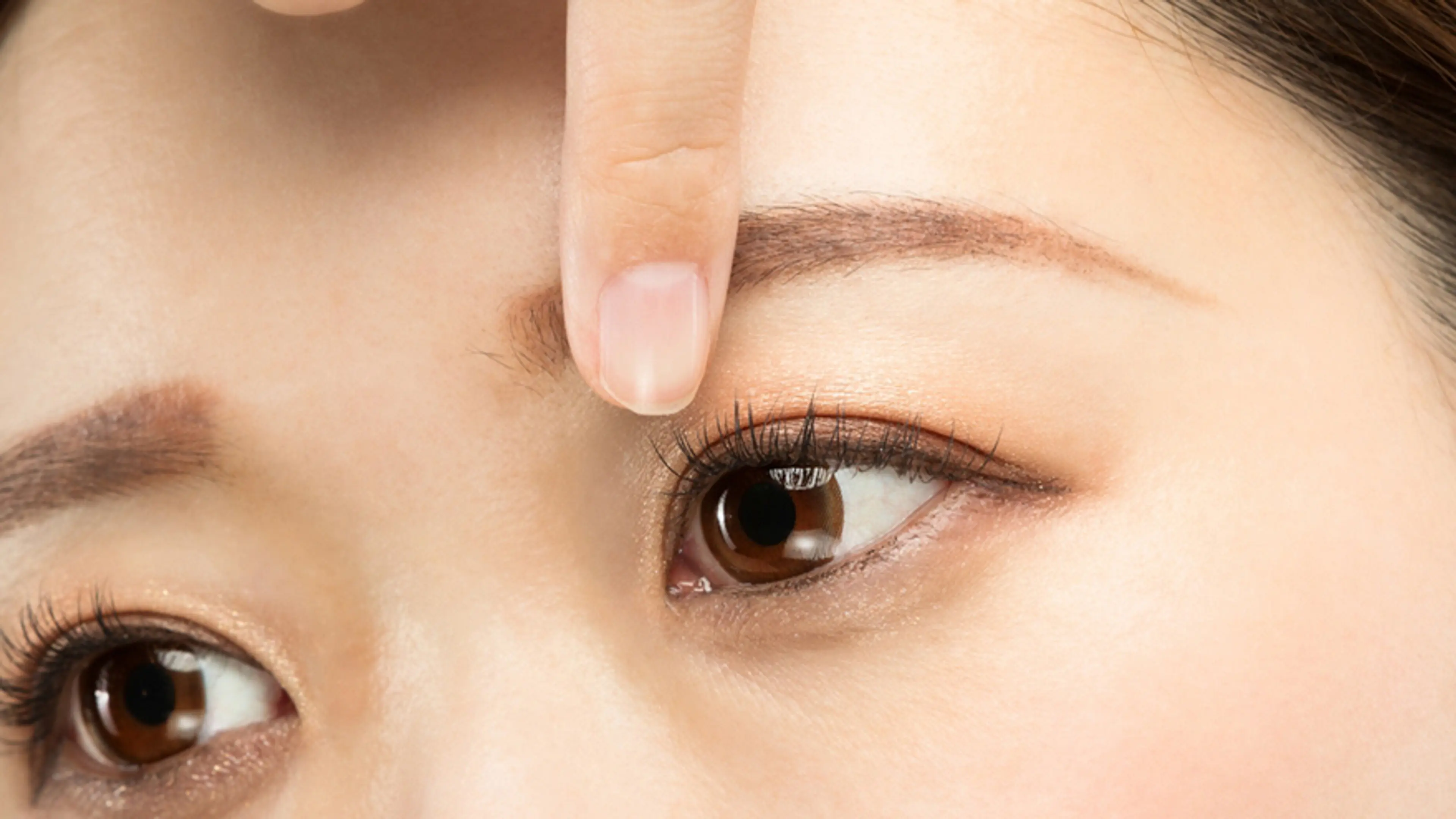
There’s a moment we see almost every week at our clinic. A patient sits across from us, gently lifts one eyelid with a fingertip, and asks with a mix of frustration and curiosity, “Why are my eyelids never the same?” For some, the asymmetry is mild and only noticeable in photos. For others, one eyelid may feel heavy, while the other looks perfectly defined. And for many patients, the crease seems to appear in the morning and then fade away as the day goes on.
If you’ve experienced this, you’re far from alone. Uneven double eyelids are one of the most common concerns among patients seeking eyelid surgery in Korea. It’s an issue that has less to do with beauty standards and more to do with how important the eyes are to facial harmony. A tiny 1–2 mm difference can change the entire expression of the face, sometimes making one eye appear smaller, sleepier, or less expressive than the other.
Before diving into how we correct uneven double eyelids, it’s important to understand why they happen in the first place.
Most people think they did something wrong — maybe they slept oddly, rubbed their eyes too much, or aged “unevenly.” But the truth is much more complex. Eyelid asymmetry can occur for several reasons, and identifying the right cause is the foundation for choosing the best treatment.
Every face has small asymmetries. In fact, most people have one eye that opens slightly wider, a cheekbone that sits a bit higher, or a dominant brow that lifts more naturally. The eyelids are no exception.
Differences in eyelid anatomy can include:
Variations in the thickness of the eyelid skin
Differences in the amount or placement of eyelid fat
Slight discrepancies in the strength of the levator muscle
Naturally uneven attachments of the skin to the underlying tissues
These subtle distinctions can create eyelid creases of different heights or stability. Some people are born with a stable crease on one side and a weaker or intermittent crease on the other. This is especially common among younger patients in Korea and throughout Asia.
The important thing to know is that these natural differences are normal, but they can become more noticeable under makeup, studio lighting, or as you age.
Age plays a major role in eyelid symmetry. As the years pass, the skin naturally becomes thinner and loses elasticity. The underlying fat can shift, and the muscles that lift the eyelid may weaken. What’s unique is that aging doesn’t always happen symmetrically — everyone has a “dominant side” of the face that ages differently.
For example:
If you sleep predominantly on one side, that eyelid may stretch slightly faster.
Sun exposure can be stronger on one side when driving.
Habitual facial expressions can cause one brow to sit higher or lower.
We often explain this using a familiar analogy: imagine tying the ribbon of a hanbok. If one side loosens just a little faster than the other, the entire silhouette becomes unbalanced. The same happens with the eyelids.
Another common reason patients visit us is when previous double eyelid surgery healed asymmetrically. In many cases, the issue worsens slowly over time, leading patients to return years later wondering why one crease has become thicker, higher, or less stable.
Some potential causes include:
Uneven or overly tight adhesions inside the eyelid
Removal of too much fat on one side
A crease that was created too high for the patient’s anatomy
Scarring that pulls or distorts the crease
Previous ptosis that was never properly diagnosed
This can be emotionally discouraging, especially if the patient originally had surgery to feel more confident. Our role is to help patients understand what happened anatomically and how we can restore balance safely and naturally.
This is the most overlooked cause. Many patients assume their issue is the crease, but in reality, the underlying muscle that lifts the eyelid may be uneven.
If one levator muscle is weaker:
That eye opens less
The crease may sit higher or appear unstable
The eye can look tired, even after good sleep
Makeup applies unevenly
Correcting the crease alone won’t fix this. This is why a detailed examination is essential — especially in clinics like ours where we frequently treat hidden ptosis cases.
Correcting eyelid asymmetry is a blend of anatomy, artistry, and technical precision. Our goal is not to change who you are, but to restore clarity, balance, and natural movement to your gaze.
Here’s how we achieve that.
Our consultation process is intentionally thorough because eyelid asymmetry often involves multiple overlapping factors.
During consultation, we examine:
Eyelid crease height and shape
Muscle strength and response
Fat distribution and volume
Skin thickness and elasticity
Brow position and forehead activity
Any signs of hidden ptosis
Natural habits (sleeping patterns, eye rubbing, dominant expression side)
To be honest, this step matters more than the operation itself. Without precise diagnosis, even technically perfect surgery cannot create a harmonious result.
When asymmetry results from crease height differences or unstable fold formation, correcting the crease becomes the priority.
Ideal for:
Younger patients
Thin or less oily eyelid skin
Mild to moderate asymmetry
First-time procedures with minimal tissue laxity
This method uses fine sutures to reinforce or recreate the crease. What matters most is tension control — the technique must create a crease that holds naturally without feeling tight or artificial. Our approach focuses on creating a crease that blends seamlessly with your natural eyelid movement.
Think of it like delicate tailoring: even a small adjustment can transform the entire fit.
Recommended when:
The skin is thicker
Previous surgery resulted in heavy scarring
The crease is irregular
Fat redistribution is needed
Longer-lasting stability is required
With this method, we can directly revise the internal structures, adjust fat placement, and reshape the crease with precision. This allows for long-term results that age naturally with the patient.
Ptosis correction is one of the most transformative solutions for uneven eyelids. When the levator muscle is properly tightened, the eye opens with more energy, balance, and clarity.
Patients often tell us after surgery that they feel a surprising sense of lightness — not just visually, but physically. They no longer struggle to keep their eyes open, apply makeup evenly, or worry about looking tired.
Muscle tightening is a delicate procedure, and its success depends heavily on understanding how the eyelid should move during blinking and smiling. This is where experience truly matters. Our team ensures that the eyelids move naturally and symmetrically, not just when resting but during expression as well.
Eyelid fat is a misunderstood topic. Too many people think removing fat will create a cleaner crease, but overly aggressive removal can quickly lead to a hollow, aged appearance.
Instead, we focus on sculpting:
Reducing excess where it causes heaviness
Repositioning fat to support the crease
Preserving volume for softness and youthfulness
This kind of balanced approach maintains the organic, natural look preferred by many patients in Korea, where harmony is more valued than dramatic change.
In patients over 40, eyelid asymmetry often appears due to skin laxity. One eyelid may droop more noticeably, creating a heavier appearance on one side.
A subtle upper blepharoplasty can:
Remove excess skin
Restore eyelid definition
Improve symmetry
Reduce heaviness
Our priority is always to avoid an overcorrected look. The goal is freshness, not a surgically altered expression.
We often remind patients that absolute symmetry is neither natural nor necessary. Even the most symmetrical faces have small variations. What we aim for is aesthetic balance — a sense of harmony where both eyes work together to express your emotions.
When the eyelids feel stable, bright, and naturally proportionate, patients often say they feel like a weight has been lifted from their daily routine.
A 27-year-old patient visited us because her left eyelid crease disappeared by midday. Every morning, she felt hopeful, but by lunchtime, she was back to adjusting her eyeliner in frustration.
During consultation, we discovered she had mild ptosis on the left side and a naturally weaker crease. Instead of simply raising the crease, we tightened the levator muscle and created a crease designed to match her natural anatomy.
Two months after surgery, she returned smiling. “My eyes finally look like they belong together,” she said. Moments like this reflect why our work is so rewarding.
Recovery varies depending on the method used, but most patients return to daily routines in 3–7 days. Initial swelling subsides quickly, and the eyes look increasingly natural week by week. Final results typically stabilize over one to three months.
Patients are often surprised at how natural they look even early in the healing process. This is due to gentle tissue handling and precise surgical planning.
Just as our breast augmentation work with Sebin implants is known for natural, customized results, our eyelid corrections emphasize harmony, stability, and expressive beauty.
If you’ve been struggling with unstable creases, mismatched eyelids, or lingering dissatisfaction from previous surgery, you’re not alone. Uneven eyelids can be corrected safely and beautifully with the right diagnosis and technique.